

What are the research trends in vibration damper technology?
Sep 16, 2025
Hey there! As a supplier of Vibration Dampers, I've been keeping a close eye on the research trends in this field. Vibration dampers play a crucial role in various industries, from construction to automotive, and even in the aerospace sector. They help reduce vibrations, which can cause damage to equipment, affect performance, and even pose safety risks. So, let's dive into what's new and exciting in vibration damper technology.
Smart and Adaptive Dampers
One of the most significant trends in vibration damper research is the development of smart and adaptive dampers. These dampers can adjust their damping characteristics in real-time based on the changing vibration conditions. For example, in a building, if there's an earthquake or strong wind, the smart damper can sense the vibrations and instantly change its settings to provide optimal damping.
This is made possible through the use of advanced sensors and control systems. The sensors can detect the amplitude, frequency, and direction of the vibrations, and then send this information to the control unit. The control unit, in turn, adjusts the damper's parameters, such as the damping force or stiffness.
The advantage of smart and adaptive dampers is that they can provide better performance compared to traditional dampers. They can adapt to different operating conditions, which means they can work effectively in a wider range of situations. For instance, in a vehicle, a smart damper can adjust to different road surfaces and driving styles, providing a smoother and more comfortable ride.
Material Innovations
Another important trend is the use of new materials in vibration damper design. Traditional dampers often use materials like steel and rubber, but researchers are now exploring the use of advanced materials such as shape memory alloys (SMAs) and magnetorheological (MR) fluids.
Shape memory alloys are materials that can "remember" their original shape and return to it when heated or cooled. In a vibration damper, SMAs can be used to change the damper's stiffness. When the SMA is in its martensitic phase (at a lower temperature), it's more flexible, and when it's in its austenitic phase (at a higher temperature), it's stiffer. This property allows the damper to adjust its damping characteristics based on the temperature or other external factors.
Magnetorheological fluids, on the other hand, are fluids that can change their viscosity when exposed to a magnetic field. In a MR damper, the fluid is placed between two electrodes, and when a magnetic field is applied, the fluid's viscosity increases, which in turn increases the damping force. MR dampers can be controlled very precisely, making them suitable for applications where high-performance damping is required, such as in high-speed trains or racing cars.
Miniaturization and Integration
With the advancement of technology, there's a growing demand for smaller and more integrated vibration dampers. In many modern devices, such as smartphones, wearables, and drones, space is limited, and traditional dampers may not fit. So, researchers are working on developing miniaturized dampers that can still provide effective vibration control.
These miniaturized dampers are often integrated with other components, such as sensors and actuators, to create a more compact and efficient system. For example, in a smartphone, a vibration damper can be integrated with the gyroscope or accelerometer to reduce the vibrations caused by the device's movement, improving the accuracy of the sensors.
Aerodynamic and Hydrodynamic Dampers
In some applications, such as in aircraft and ships, aerodynamic and hydrodynamic dampers are being studied. These dampers use the flow of air or water to dissipate the vibration energy.
For example, an Air Flow Spoiler can be used on an aircraft wing to reduce the vibrations caused by the airflow. The spoiler disrupts the airflow, creating turbulence, which in turn dissipates the vibration energy. Similarly, in a ship, hydrodynamic dampers can be used to reduce the vibrations caused by the water flow around the hull.

Application in Renewable Energy
As the demand for renewable energy sources like wind turbines and solar panels increases, the need for effective vibration control in these systems also grows. Vibration in wind turbines can cause fatigue damage to the blades and other components, reducing their lifespan and efficiency.
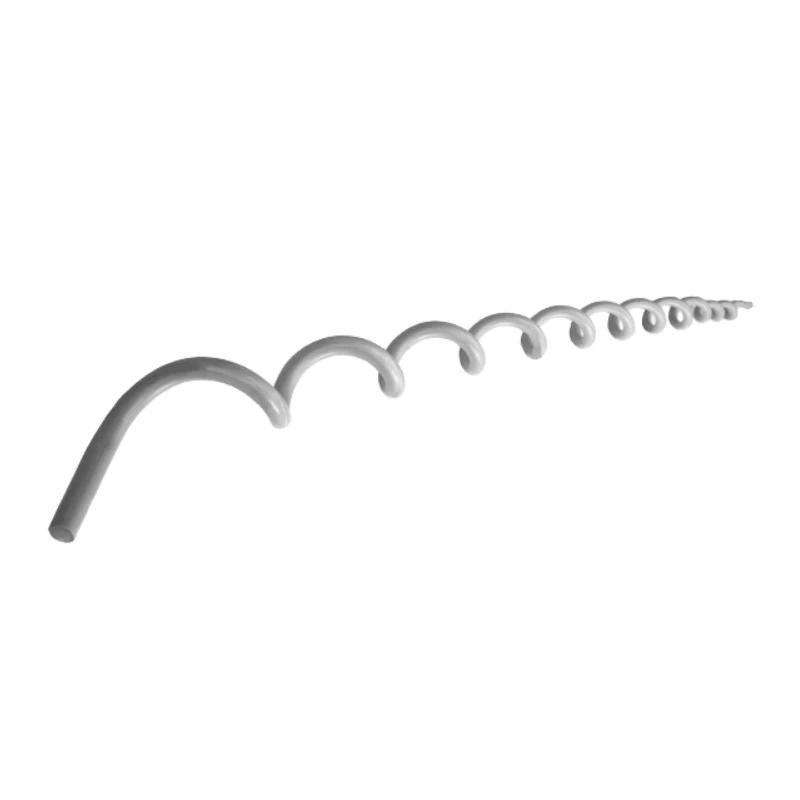
Researchers are developing specialized vibration dampers for wind turbines, such as Spiral Vibration Damper and tuned mass dampers. These dampers can reduce the vibrations caused by the wind, improving the reliability and performance of the turbines.
In solar panels, vibrations can also affect the efficiency of the photovoltaic cells. Vibration dampers can be used to reduce the vibrations caused by wind or other external factors, ensuring that the solar panels operate at their optimal level.
Conclusion
The research trends in vibration damper technology are diverse and exciting. From smart and adaptive dampers to material innovations and new applications in renewable energy, there's a lot happening in this field. As a Vibration Damper supplier, I'm excited to be part of this evolving industry.
If you're in need of high-quality vibration dampers for your project, whether it's for construction, automotive, aerospace, or renewable energy, don't hesitate to reach out. We offer a wide range of vibration dampers that are designed to meet the latest research trends and provide the best performance. Contact us to start a procurement discussion and find the perfect solution for your needs.
References
- Smith, J. (2020). Advances in Smart Vibration Dampers. Journal of Engineering Mechanics, 146(3), 04020012.
- Johnson, A. (2019). Material Innovations in Vibration Damper Design. Materials Science and Engineering, 789, 123-135.
- Brown, C. (2021). Miniaturized Vibration Dampers for Modern Devices. Microelectronics Journal, 108, 104915.
- Green, D. (2022). Aerodynamic and Hydrodynamic Dampers in Aerospace and Marine Applications. Journal of Fluid Mechanics, 934, A12.
- White, E. (2023). Vibration Control in Renewable Energy Systems. Renewable Energy, 201, 567-579.