

What are the quality standards for Helical Armor Rod?
Sep 22, 2025
As a supplier of Helical Armor Rods, I've witnessed firsthand the critical role these components play in the protection and longevity of power lines and optical cables. Helical Armor Rods are essential accessories that provide mechanical protection to conductors, shielding them from abrasion, vibration, and other environmental factors. But what exactly are the quality standards for Helical Armor Rods? In this blog post, I'll delve into the key quality criteria that define a high - performance Helical Armor Rod.
Material Quality
The foundation of a good Helical Armor Rod lies in its material. The most commonly used materials for Helical Armor Rods are aluminum alloy and steel. Aluminum alloy is favored for its lightweight nature, high corrosion resistance, and good electrical conductivity. Steel, on the other hand, offers high strength and is suitable for applications where greater mechanical protection is required.
The material should have consistent chemical composition and mechanical properties. For aluminum alloy rods, the alloying elements should be within the specified range to ensure optimal performance. For example, the content of copper, magnesium, and silicon in an aluminum - magnesium - silicon alloy can affect its strength, ductility, and corrosion resistance.
The material must also be free from internal defects such as cracks, porosity, and inclusions. These defects can significantly weaken the rod and reduce its service life. Non - destructive testing methods, such as ultrasonic testing and eddy - current testing, are often used to detect such defects during the manufacturing process.
Dimensional Accuracy
Precise dimensions are crucial for Helical Armor Rods. The diameter of the rod should be accurately controlled to ensure a proper fit around the conductor. If the diameter is too large, the rod may not provide sufficient protection; if it's too small, it may be difficult to install and could cause damage to the conductor during installation.
The pitch of the helix is another important dimension. The pitch determines how tightly the rod wraps around the conductor and affects its ability to distribute stress evenly. A consistent pitch along the entire length of the rod is necessary for uniform protection.
In addition, the length of the Helical Armor Rod should be appropriate for the specific application. It should be long enough to cover the vulnerable areas of the conductor but not so long that it becomes wasteful or difficult to handle.
Surface Finish
A smooth and clean surface finish is essential for Helical Armor Rods. A rough surface can cause abrasion to the conductor, leading to premature wear and damage. Moreover, a rough surface can also trap moisture and contaminants, which may accelerate corrosion.
The surface should be free from burrs, sharp edges, and scratches. These imperfections can not only damage the conductor but also pose a safety hazard during installation. A proper surface treatment, such as anodizing for aluminum alloy rods or galvanizing for steel rods, can enhance the corrosion resistance and improve the overall appearance of the rod.
Mechanical Performance
Helical Armor Rods need to have excellent mechanical performance to withstand the various forces they are subjected to in service. Tensile strength is a key mechanical property. The rod should be able to withstand a certain amount of tensile force without breaking or deforming permanently. This is especially important in applications where the conductor may be subjected to high - tension forces, such as in long - span power lines.
Flexibility is also crucial. The rod should be flexible enough to be easily wrapped around the conductor during installation but still retain its shape and structural integrity. A rod that is too rigid may crack or break during installation, while one that is too flexible may not provide adequate protection.
Corrosion Resistance
Since Helical Armor Rods are often exposed to harsh environmental conditions, corrosion resistance is a vital quality standard. The choice of material and surface treatment plays a significant role in determining the rod's corrosion resistance.
As mentioned earlier, aluminum alloy rods can be anodized to form a protective oxide layer on the surface, which helps prevent corrosion. Steel rods can be galvanized to provide a sacrificial zinc coating that protects the underlying steel from rusting.
In addition to the material and surface treatment, the design of the Helical Armor Rod can also affect its corrosion resistance. For example, a design that allows for proper drainage of moisture can help prevent the accumulation of water, which is a major cause of corrosion.
Compatibility with Other Components
Helical Armor Rods are often used in conjunction with other components such as Corona Coils, Spiral Vibration Damper, and Air Flow Spoiler. Therefore, they need to be compatible with these components.
The Helical Armor Rod should not interfere with the proper functioning of other components. For example, it should not obstruct the movement of a Spiral Vibration Damper or affect the performance of a Corona Coil. Compatibility also includes electrical compatibility. In applications where electrical conductivity is important, the Helical Armor Rod should have appropriate electrical properties to ensure seamless integration with other electrical components.
Compliance with Standards and Regulations
Helical Armor Rods should comply with relevant national and international standards and regulations. These standards define the minimum requirements for material, dimensions, mechanical properties, and other quality aspects.
For example, in the power industry, standards such as IEEE (Institute of Electrical and Electronics Engineers) and IEC (International Electrotechnical Commission) provide guidelines for the design, manufacture, and testing of Helical Armor Rods. Compliance with these standards ensures that the rods meet the industry - recognized quality benchmarks and are safe and reliable for use in power systems.
Testing and Certification
To ensure that Helical Armor Rods meet the quality standards, rigorous testing is required. Various tests can be conducted, including tensile tests, bending tests, corrosion tests, and dimensional inspections.
Tensile tests are used to determine the rod's tensile strength and elongation at break. Bending tests assess the rod's flexibility and its ability to withstand deformation during installation. Corrosion tests, such as salt - spray tests, simulate harsh environmental conditions to evaluate the rod's corrosion resistance.
Certification from independent testing laboratories is an important indicator of the rod's quality. A certified Helical Armor Rod gives customers confidence that the product has been thoroughly tested and meets the required standards.
Conclusion
In conclusion, the quality standards for Helical Armor Rods encompass a wide range of aspects, including material quality, dimensional accuracy, surface finish, mechanical performance, corrosion resistance, compatibility with other components, and compliance with standards. As a supplier, we are committed to producing Helical Armor Rods that meet these high - quality standards.
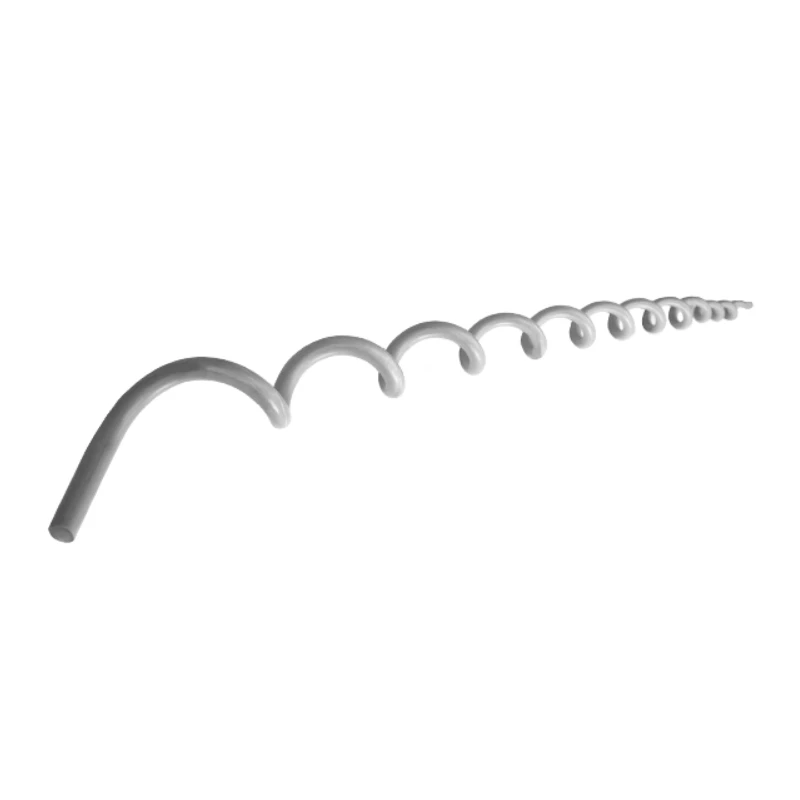

If you are in the market for Helical Armor Rods or have any questions about our products, we encourage you to reach out to us for a detailed discussion. We can provide you with more information about our product range, quality control processes, and how our Helical Armor Rods can meet your specific needs. Whether you are involved in power transmission, telecommunications, or other related industries, we are confident that our high - quality Helical Armor Rods will provide reliable protection for your conductors.
References
- IEEE Standards Association. "IEEE Standards for Power System Components."
- International Electrotechnical Commission. "IEC Standards for Electrical Equipment."
- Textbooks on materials science and engineering related to aluminum alloys and steel.