

What are the inspection indicators for Helical Armor Rod?
Oct 10, 2025
Helical armor rods are essential components in the protection of overhead power lines and optical cables. As a dedicated supplier of helical armor rods, I understand the importance of ensuring their quality and performance. In this blog, I will delve into the key inspection indicators for helical armor rods, which are crucial for maintaining the integrity and reliability of power and communication systems.
Material Quality
The first and foremost inspection indicator for helical armor rods is the material quality. High - quality materials are the foundation of a reliable helical armor rod. Commonly, helical armor rods are made of aluminum alloy or steel.
For aluminum alloy helical armor rods, the chemical composition is a critical factor. The content of elements such as silicon, iron, copper, and magnesium should be within the specified range. For example, excessive iron content may reduce the corrosion resistance of the armor rod, while improper copper content can affect its mechanical properties. A well - controlled chemical composition ensures that the armor rod has good ductility, strength, and corrosion resistance.
When it comes to steel helical armor rods, the carbon content, along with the presence of other alloying elements like manganese, chromium, and nickel, needs to be carefully monitored. High - carbon steel may offer greater strength but can be more brittle, while the addition of alloying elements can enhance corrosion resistance and toughness.
The material should also be free from internal defects such as cracks, porosity, and inclusions. Non - destructive testing methods like ultrasonic testing or magnetic particle testing can be employed to detect these hidden flaws. Any internal defect can significantly weaken the armor rod and lead to premature failure under stress.
Dimensional Accuracy
Dimensional accuracy is another vital inspection indicator. The diameter of the helical armor rod must match the specifications of the cable or conductor it is intended to protect. A too - small diameter may result in poor contact and insufficient protection, while a too - large diameter can make the installation difficult and may not provide the necessary grip.
The pitch of the helix is also crucial. It should be uniform throughout the length of the armor rod. An inconsistent pitch can cause uneven stress distribution on the cable, which may lead to cable damage over time. The length of the helical armor rod should be within the tolerance range specified by the design. Incorrect length can affect the overall performance and installation process.
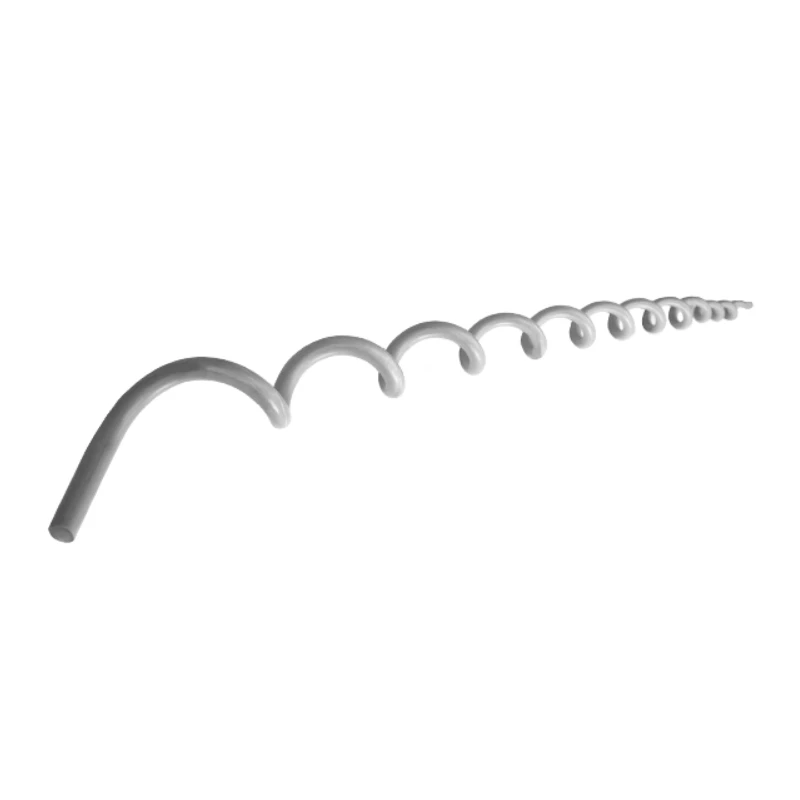

The surface finish of the armor rod is also part of the dimensional inspection. A smooth surface finish not only improves the aesthetics but also reduces the risk of abrasion to the cable. Rough surfaces can cause scratches on the cable, which may compromise its insulation and mechanical properties.
Mechanical Properties
The mechanical properties of helical armor rods play a significant role in their performance. Tensile strength is one of the most important mechanical properties. It measures the maximum amount of tensile stress the armor rod can withstand before breaking. A high tensile strength is essential, especially in areas prone to strong winds or ice loading, as the armor rod needs to resist the pulling forces without failure.
Yield strength is another key parameter. It indicates the stress at which the armor rod begins to deform plastically. A well - designed armor rod should have a yield strength that is high enough to prevent permanent deformation under normal operating conditions.
Elongation at break is also an important mechanical property. It reflects the ability of the armor rod to stretch before breaking. A higher elongation at break means that the armor rod can absorb more energy during deformation, which is beneficial in situations where the cable may experience sudden movements or vibrations.
Corrosion Resistance
Corrosion can severely affect the performance and lifespan of helical armor rods. Therefore, corrosion resistance is a critical inspection indicator. The armor rod should be able to withstand the environmental conditions it will be exposed to, such as humidity, salt spray, and chemical pollutants.
The corrosion resistance of aluminum alloy armor rods can be enhanced through anodizing or other surface treatment processes. Anodizing creates a protective oxide layer on the surface of the aluminum, which acts as a barrier against corrosion. For steel armor rods, galvanizing or applying anti - corrosion coatings can significantly improve their corrosion resistance.
Salt spray testing is a common method used to evaluate the corrosion resistance of helical armor rods. In this test, the armor rod is exposed to a salt - water mist for a specified period, and then the degree of corrosion is assessed. The results of this test can help determine whether the armor rod meets the required corrosion resistance standards.
Installation Ease
Although not a physical property, the ease of installation is an important inspection aspect. A well - designed helical armor rod should be easy to install on the cable or conductor. It should have a proper shape and flexibility to be wound around the cable smoothly.
The ends of the armor rod should be properly finished to prevent sharp edges that could cut the installer's hands or damage the cable during installation. Additionally, the armor rod should be able to maintain its position on the cable without the need for excessive force or additional fixing devices.
Compatibility with Other Components
Helical armor rods often work in conjunction with other components such as Air Flow Spoiler, Spiral Vibration Damper, and Vibration Damper. Compatibility with these components is an important inspection indicator.
The armor rod should be able to work in harmony with the vibration dampers to reduce the impact of wind - induced vibrations on the cable. It should not interfere with the function of the air flow spoiler, which is designed to reduce the aerodynamic drag on the cable.
Conclusion
In conclusion, the inspection of helical armor rods involves multiple indicators, including material quality, dimensional accuracy, mechanical properties, corrosion resistance, installation ease, and compatibility with other components. As a supplier, we are committed to ensuring that our helical armor rods meet the highest standards in all these aspects.
If you are in the market for high - quality helical armor rods or have any questions regarding their performance and inspection, please feel free to contact us for procurement and further discussion. We are ready to provide you with the best products and solutions to meet your specific needs.
References
- ASTM International standards related to helical armor rods
- IEEE standards for overhead power line components
- Industry research papers on cable protection and component performance